
In pain, injured or stuck in sub-optimal movement? We restore how your body moves, how your mind controls movement, and how you feel while doing it—so you can return to action without compromise.
This Relief phase is about eliminating pain, restoring function, and getting you back to baseline. From here, we help you transition into Readiness—where you prepare for optimal performance and longevity.

Acute and Chronic Pain Relief
Science-backed care to relieve pain, improve movement, and prevent recurrence.
-
Soft tissue and joint therapy
-
Joint adjusting, dry needling, laser therapy, and functional rehab
-
Postural re-education and movement strategies

Injury Rehabilitation
Recovering from an injury is more than healing tissues—it’s retraining your nervous system, rebuilding confidence, and restoring trust in your body.
-
Acute or chronic injury care
-
Post-surgical recovery
-
Return-to-sport or return-to-duty planning
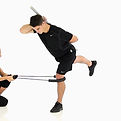
Neuromuscular Recalibration
We retrain the brain-body connection so you move with better control, less fear, and greater confidence.
-
Improve balance, coordination, and stability
-
Retrain muscles after injury or poor movement habits
-
Reduce stiffness, weakness, and compensation patterns
Treatment & Recovery Tools We Use
-
Chiropractic Care
-
Chiropractic Adjustments
-
Activator Methods® (Low-Force Adjusting)
-
Chiropractic Neurology
-
Thompson Drop
-
Diversified
-
-
Soft Tissue & Manual Therapy
-
Myofascial Release Therapy
-
Instrument-Assisted Soft Tissue Mobilization (IASTM)
-
Cupping Therapy
-
Fascial Manipulation
-
-
Dry Needling & Modalities
-
Dry Needling
-
Class IV Medical Laser
-
Class 3B Laser Therapy
-
Electric Muscle Stimulation (E-Stim)
-
Vibracussor Fascial Therapy
-
-
Rehabilitation & Corrective Exercise
-
Physiotherapy & Rehab Exercise Programs
-
Post-Surgical Rehabilitation
-
McKenzie Method® (MDT)
-
Crossover Symmetry® Shoulder System
-
Functional Movement Retraining
-
Balance & Stability Training
-
-
Neurological & Functional Rehabilitation
-
Functional Neuro-Orthopedic Rehabilitation
-
Neurodynamics
-
Dynamic Neuromuscular Stabilization (DNS)
-
Proprioceptive Neuromuscular Facilitation (PNF) & Reactive Neuromuscular Training (RNT)
-
Neuro-Visual Training
-
-
Movement & Performance Screening
-
Functional Movement Screen (FMS)
-
Selective Functional Movement Assessment (SFMA)
-
Fundamental Capacity Screen (FCS)
-
Y Balance Test
-
Functional Breathing Screen
-
Injury Rehab & Movement Performance
A common-sense approach to evaluating and correcting movement.
1
A Systematic Approach
Screen: This first step quickly highlights any movement limitations or compensation patterns. Tools like the Functional Movement Screen help us spot potential issues before they become problems.
Test: Next, we take a deeper look at specific movements to understand why something isn’t working well. This includes evaluating strength, flexibility, stability, balance, and control.
Assess: Using more detailed assessments, we identify the true source of the movement problem and determine what needs to be corrected. This step directs individualized interventions and provides a baseline to measure progress over time.
3
2
Patterns, Not Parts
It's more effective to assess and address movement patterns throughout the body rather than isolating and treating individual body parts or specific muscles.
Pain and dysfunction often result from faulty movement patterns, and simply addressing the symptomatic body part may not provide long-term relief.
4
Hardware vs. Software
Protect | Correct | Develop
-
Hardware: This refers to the body’s physical structures—bones, joints, muscles, and tissues—that can be strained or injured and may require hands-on therapy or medical intervention.
-
Software: This represents the movement “operating system”—your motor control, stability, coordination, and neuromuscular patterns—which improve through targeted training and practice.
If either one has an issue, performance drops. Fixing both leads to safer movement, better strength, and fewer injuries.
Protect: Don’t pour strength on top of dysfunction—and sometimes that means removing certain movements or environments to keep you safe.
Correct: Clean up and tune the movement patterns so your body can actually do what you’re asking of it.
Develop: Train at higher levels without worrying about setbacks.
Join the Boulder FIT Health & Performance family and experience the difference with a comprehensive, guided, and sustainable approach to sports medicine and injury rehabilitation.
Schedule Your Consultation Today
Take the first step towards a pain-free and stronger you. Contact us to schedule your initial consultation and begin your journey to recovery.