Longevity: Adding Life to Your Years
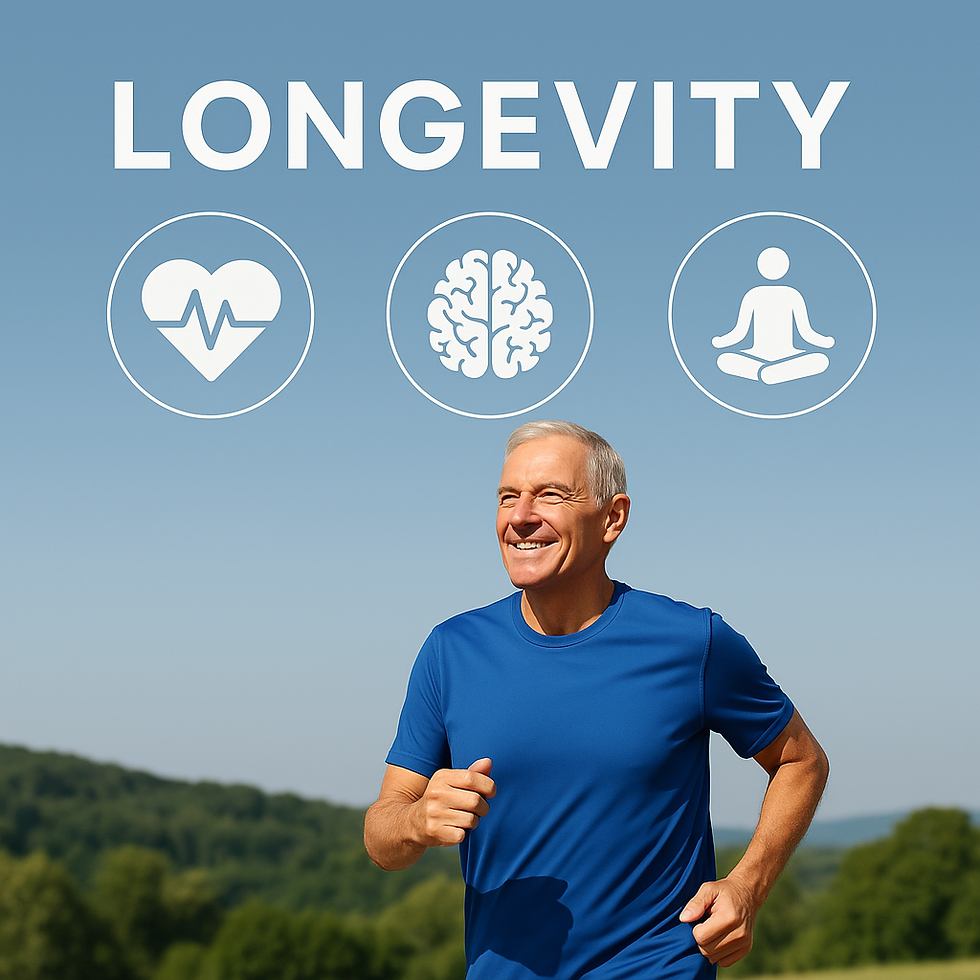
When I talk about longevity, I’m not just referring to how many years you live. For me, longevity means adding life to your years—living longer and living better. Too often, people picture longevity as some magical formula to push us past 100. But in reality, it’s much more nuanced. True longevity is about optimizing both lifespan (how long you live) and healthspan (how well you live).
The real goal isn’t just reaching a certain age—it’s ensuring those years are filled with health, energy, and independence. That way, you’re not simply enduring more years; you’re actively enjoying them.
Lifespan vs. Healthspan
Lifespan: The total number of years you live. Thanks to modern medicine and better living conditions, most of us can expect to live well into our 70s, 80s, or beyond.
Healthspan: The number of years you live in good health—able to move, think, and enjoy life without being held back by disease or decline.
The challenge is called
the Tithonus error, drawn from Greek mythology. Tithonus was granted eternal life, but not eternal youth. He lived on, but his body withered away. This is what happens when we focus only on lifespan and neglect healthspan. And if you’ve watched a loved one struggle through their last years, you know exactly what I mean.
The Three Pillars of Healthspan
To live not just longer but better, we have to focus on three critical areas:
Physical Function: Preserving your ability to move well, lift, carry, and stay active. This means maintaining strength, endurance, balance, and mobility so you can remain independent and enjoy the activities you love—whether that’s hiking the Flatirons, riding your bike, or simply keeping up with your grandkids.
Cognitive Health: Protecting your brain so memory, focus, and decision-making stay sharp. Cognitive decline doesn’t happen overnight, but without proactive steps, it can quietly steal quality of life.
Emotional Health: Managing stress, maintaining relationships, and living with a sense of purpose. Emotional health is often overlooked, but it’s the glue that holds everything else together. A resilient mind and strong connections make a long life worth living.
Compressing Morbidity
The real goal is to compress the period of decline at the end of life—what we call “compressing morbidity.” Ideally, you stay healthy and independent right up until the very end, without spending years battling illness or losing your ability to function.
Unfortunately, much of modern medicine is built around keeping people alive after they’ve gotten sick. It’s reactive. What we need is a proactive approach that identifies risks early and helps prevent decline before it starts.
Enter Medicine 3.0
Medicine 1.0 was about survival—fighting off infections and injuries.
Medicine 2.0 brought us antibiotics, surgeries, and emergency medicine, which dramatically extended lifespan.
Medicine 3.0 is the next step: proactive, personalized, and prevention-focused.
Here’s what it looks like:
Proactive Care: Prevent disease before it takes hold.
Personalization: Use genetics, biomarkers, and lifestyle data to create health strategies tailored to you.
Empowerment: Give people the tools and knowledge to manage their own health every day.
Imagine knowing your risk for heart disease, cancer, or Alzheimer’s decades in advance—and being able to take action now to lower that risk. That’s Medicine 3.0. It’s not science fiction; it’s already possible with the right testing, monitoring, and coaching.
Why This Matters
Here in Boulder, we live in one of the healthiest, most active communities in the country. But even here, I see people falling into the trap of chasing mileage, workouts, or diet trends without truly addressing the foundations of healthspan. The goal isn’t just to finish more marathons or climb more peaks—it’s to make sure your body, brain, and spirit can carry you through decades of doing the things you love.
At Boulder FIT Health & Performance, we focus on blending evidence-informed science with practical, personalized coaching. This means evaluating your movement, recovery, cognitive function, and emotional resilience—all of the key elements that shape longevity.
Closing Thoughts
Longevity isn’t about trying to live forever. It’s about making intentional choices now to ensure you live as long and as well as possible. By embracing the principles of Medicine 3.0 and focusing on the three pillars of healthspan, you can align your lifespan with your healthspan, compress morbidity, and live a fuller life.
The opportunity is here, and the tools are available. The question is: how do you want to use them?
Stay tuned as we begin unpacking each of the three pillars—physical function, cognitive health, and emotional well-being—in greater detail. My goal is to give you actionable, relatable steps to strengthen each one so you can not only add years to your life, but life to your years.


Comments